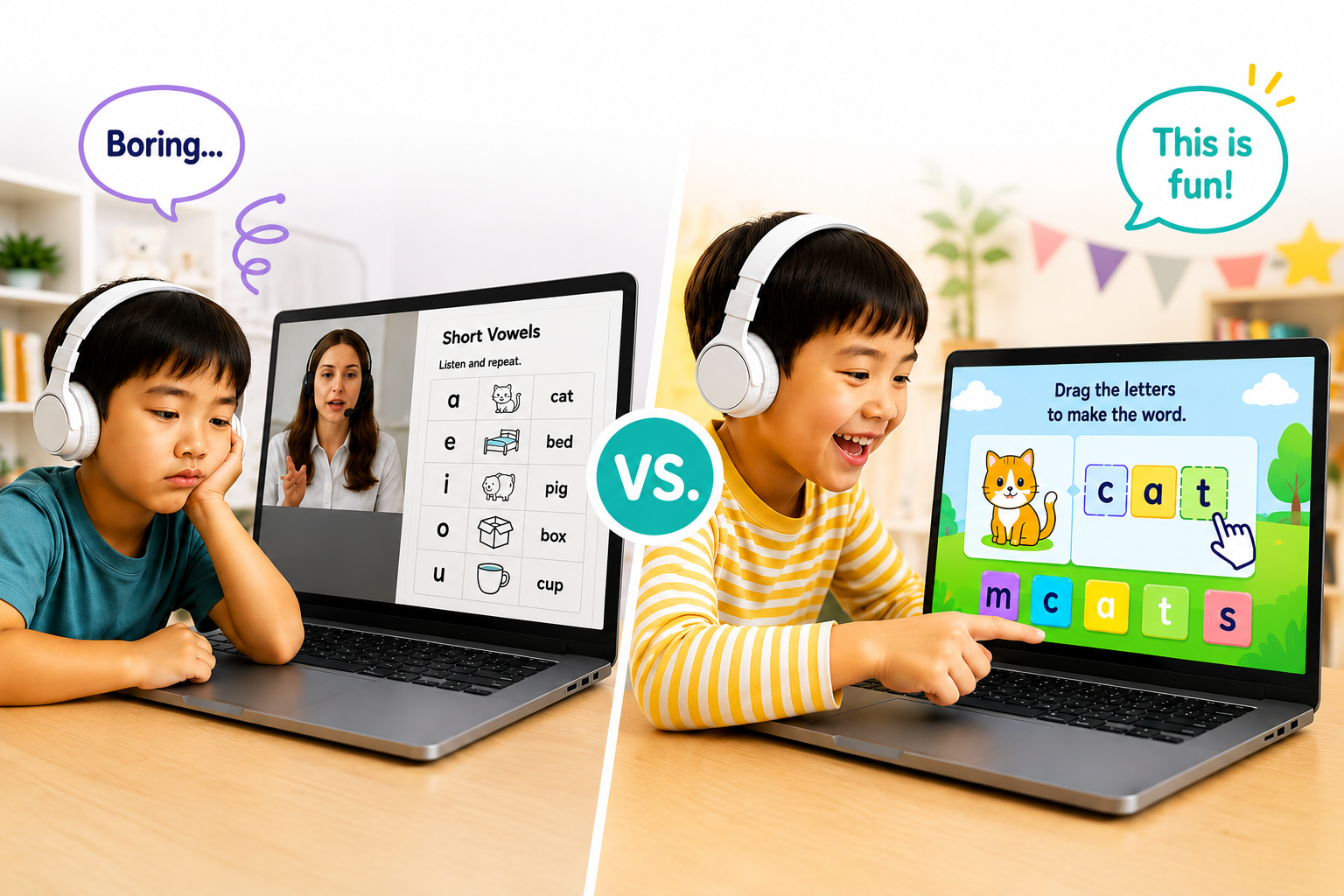
There is a moment every online ESL teacher knows well. You are mid-lesson, you have pulled up the phonics page in the textbook, and somewhere between the black-and-white vowel chart and the passive instruction to “repeat after me,” you can see it in your student’s eyes: they have switched off. Not that they are lazy. Not because phonics is too difficult. But because nothing on that screen is asking anything of them.
Traditional textbooks were designed for a physical classroom with a whiteboard, a teacher walking the room, and twenty kids who had no choice but to sit still. Online teaching is an entirely different setting. And phonics, which is already one of the more abstract things we ask young learners to grasp, needs tools that match the format you are actually teaching in.
This is precisely the reason why more and more online ESL teachers are abandoning the textbook.
The Real Problem With Phonics Textbooks (Online)
It is not an anti-textbook argument. Textbooks are not without their merits. But when you are teaching phonics over a screen, the structural limitations become very hard to work around:
- Static visuals tell. They do not engage. A cat image with the letter C next to it is okay in a classroom where a teacher can create a game around it. Online, it just sits there.
- You are not able to individualise the speed. Textbooks progress in a linear fashion. In the situation where a student has already mastered the short vowel sounds, but is struggling with blends, there is no neat way to skip or loop around without making the lesson sound improvised.
- Monotony is quickly tiresome. Phonics takes a great deal of it. But repetition in a textbook looks like reading the same word list again. Repetition in a well-thought-out digital lesson can appear in the form of a game that the student will actually want to play.
- Without physical presence, engagement is difficult to maintain. Proximity and energy have a lot of weight in a classroom. Online, your content must perform more of that labor.
None of this is a failure on the teacher’s part. It is just a mismatch between tool and context.
What a Digital-First Approach Actually Looks Like
Going digital-first does not mean handing students a screen and stepping back. It means choosing tools that are built for interaction, designed to hold attention, and flexible enough to meet each learner where they are.
The phonics program at Easy Peasy Learning is a good example of what this looks like in practice. The four levels proceed through American English phonics in the first three levels, followed by British Phase Phonics in the fourth, spanning the entire arc between foundational letter sounds and early independent reading.
But the structure is only part of it. What makes these lessons work online is the manner in which they are constructed:
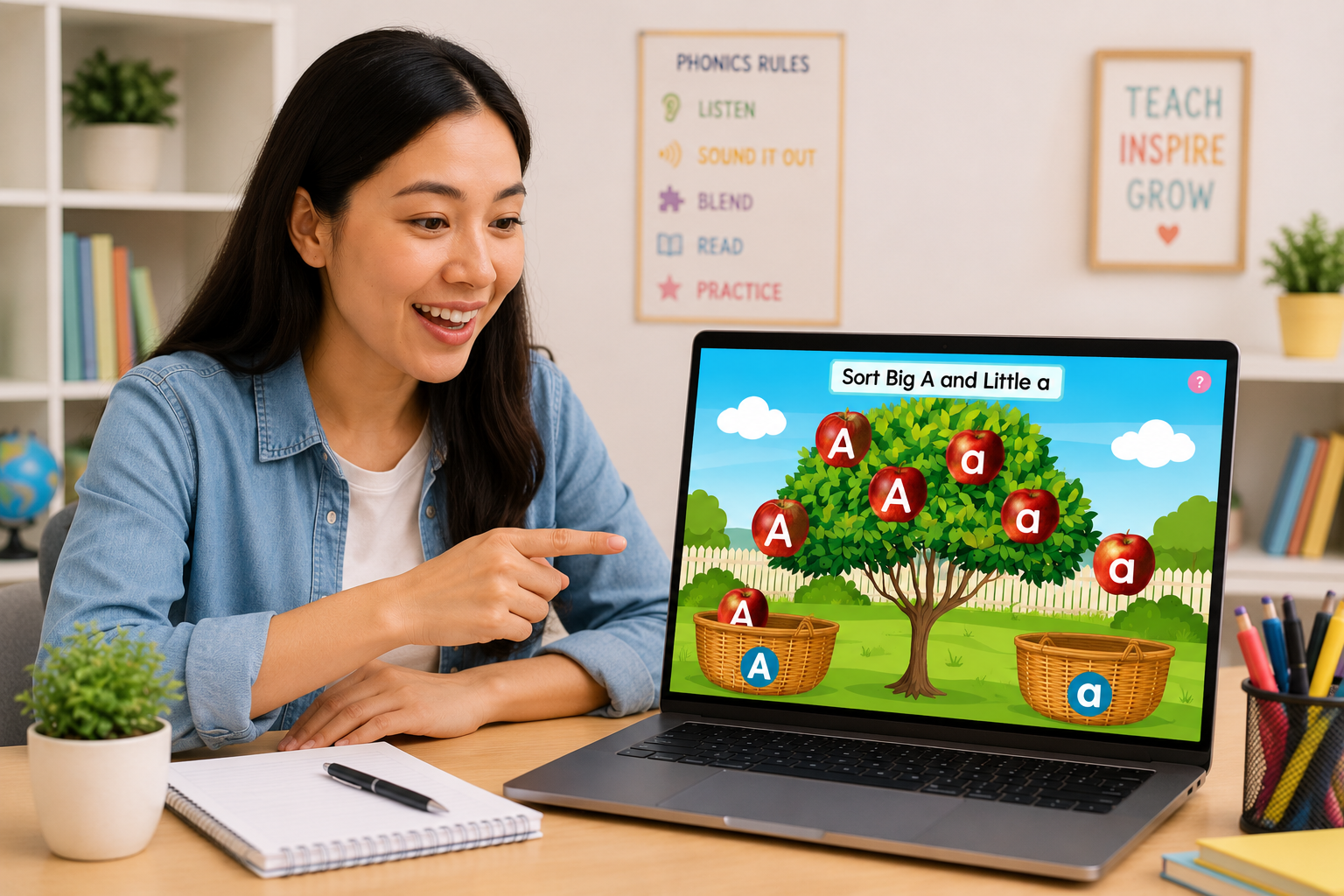
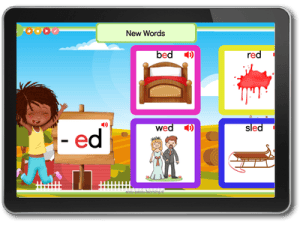
- Each lesson includes drag-and-drop activities where students physically sort, match, and arrange sounds and letters. The act of dragging an answer into place is a small thing, but it keeps hands and minds active in a way that reading or listening alone simply does not.
- Games are built directly into the lessons rather than bolted on as a reward at the end. This means engagement is woven through the learning, not dangled after it.
- The lessons are interactive enough that students are making decisions throughout, which means they stay present rather than passively waiting for the next instruction.
If you want to see it before committing to anything, you can explore the levels directly: Level 1, Level 2, Level 3, and British Phase Phonics. They are worth clicking through, especially if you have a student who has previously found phonics dull.
Flexibility Is Not a Nice-to-Have. It Is the Point.
Flexibility is one of the most compelling reasons in favor of digital phonics tools, and not only in the most obvious ways.
Yes, it is possible to teach anywhere. No, you need not print anything. But the deeper flexibility is in how you can actually respond to a student in real time. If a student breezes through the first few activities in a level, you can move them forward. If they keep confusing two similar sounds, you can revisit the relevant activity immediately without losing the thread of the lesson.
Textbooks cannot do that cleanly. Digital lessons can.
There is also something to be said for what the student experiences on their side of the screen. Whenever a lesson is truly interactive, the students are made to feel like participants as opposed to being observers. That shift is especially important in one-on-one or small-group online settings, where there is no peer group energy to rely on. The lesson must create its own momentum.
A Note on Young Learners Specifically
If you teach children, you already know that attention is a finite resource, especially online. Unless the format is correct, phonics work can easily degenerate into feeling like a drill instead of a lesson.
Interactive digital lessons change that dynamic. When a five-year-old is dragging a word into the correct vowel group, they are not drilling. They are playing. And they are also learning the same thing, only in a form that their brain is much more willing to work with.
The games embedded in the Easy Peasy Learning phonics lessons are not ornamental. They are engaged in actual pedagogical work, which is to reinforce pattern recognition, build confidence and make the session feel like something that the student decided to show up to.
Making the Switch
The transition to a digital-first phonics strategy does not need to be dramatic. Most teachers begin by adding digital lessons to whatever they already do, get a feel of how their students are responding and then slowly lean into what is working.
What tends to happen is the textbook gets used less and less, not because anyone decided to abandon it, but because the digital lessons are simply doing more. They are more engaging for the student, more flexible for the teacher, and more honest about the environment in which online teaching actually happens.
If you are curious about what a structured, interactive phonics program looks like in practice, the Easy Peasy Learning phonics program is worth exploring. All four levels are available to browse, and the lessons speak for themselves. Take a look and see whether it fits the way you already like to teach.